
Detail Cantuman
Pencarian Spesifik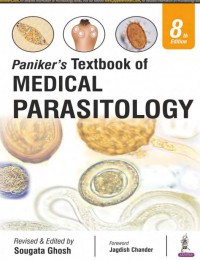
Paniker's Textbook of MEDICAL PARASITOLOGY
- Bagikan:


Medical parasitology deals with the parasites, which cause human infections and the diseases they produce. • It is broadly divided into two parts: 1. Protozoology 2. Helminthology. • The pioneer Du tch microscopist, Antonie 11an Leeuwenhoek of Holland in 1681, first introduced single lens microscope and observed Giardia in his own stools. • Louis Pastuer in 1870, first published scientific study on a protozoa( disease leading to its control and prevention during investigation of an epidemic silk worm disease in South Europe. • A seminal discovery was made in 1878 by Patrick Manson about the role of mosquitoes in filariasis. This was the first evidence of vector transmission. • Afterwards, Laveran in Algeria discovered the malarial parasite (1880), and Ronald Ross in Secunderabad and Calcuna in India, showed its transmission by mosquitoes (1897). A large nwnber of vector-borne disease have since then been identified. • By mid 20th century, with dramatic advances in antibiotics and chemotherapy, insecticides and antiparasitic drugs, and improved lifesty
Read Online
Informasi
Akses Katalog Publik Daring - Gunakan fasilitas pencarian untuk mempercepat penemuan data katalog